

Variable costs go up or down based on how much you use them, such as materials needed for production. Notice that average fixed cost (computed in the last column) decreases as the production of mobile phones increases. This understanding ensures that prices are set at a level that covers costs and generates a profit, contributing to the financial stability and sustainability retained earnings balance sheet of the business.
Break-Even Analysis
Understanding the behavior of costs is a fundamental aspect of managerial accounting. This knowledge is crucial for effective planning, controlling, and decision-making within an organization. In this section, we will delve into the concepts of fixed, variable, and mixed costs, examining their characteristics, implications, and applications in managerial accounting. The least squares method (linear regression) is probably the most accurate method of segregating the fixed and variable components of a mixed cost.
- Proper classification of costs into fixed, variable, and mixed categories is vital for effective financial management.
- For every copy that is made, the total cost of copies increases bt $0.02.
- Starting a nonprofit can be a fulfilling way to make a difference in the community, but it requires careful planning and consideration.
- Since mixed costs have characteristics of both fixed and variable costs, they are usually separated into segments in order to be graphed.
How Do Fixed Costs Differ From Variable Costs?

By doing so, it is possible to determine the fixed and variable components of the mixed cost. The High-Low Method is a simple technique used to separate the fixed and variable components of a mixed cost. It involves analyzing the highest and lowest levels of activity and the corresponding total costs. In the context of business and accounting, costs refer to the economic resources that a company expends in its operations.
Fixed Costs
- Direct Cost is explicitly related to producing a product or providing a service and can be easily assigned to a cost object.
- Fluctuations in sales and production levels can affect variable costs if factors such as sales commissions are included in per-unit production costs.
- They ensure that prices cover all overhead expenses, contributing to overall expense management.
- The fixed cost is then calculated by subtracting the variable cost from the total cost at either the highest or lowest production level.
- Variable costs are directly related to the cost of production of goods or services, while fixed costs do not vary with the level of production.
- This measures the costs that are directly tied to production, such as the costs of raw materials and labor.
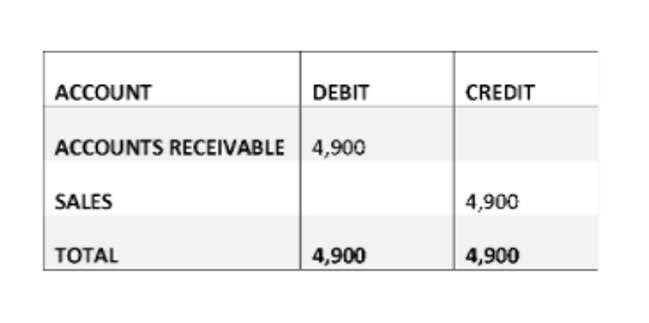
We will define mixed costs and look at various methods to analyze this type of cost. Below is a consolidated example table illustrating how fixed, variable, and mixed costs might behave and flow through accounts under different activity levels. The scattergraph method involves plotting the costs against the production levels on a graph. The graph helps to visualize the relationship between the costs and production levels.
Chapter 5: Cost Behavior and Cost-Volume-Profit Analysis
Commissions are a percentage of a sale’s proceeds that are awarded to a salesperson as additional compensation. In 2006, she obtained her MS in Accounting and Taxation and was diagnosed with Hodgkin’s Lymphoma two months later. Since 2014, she has helped over one million students succeed in their accounting classes. Let’s say that for the past month, you consumed a total of 20GB of mobile data.
- Classifying costs correctly as fixed, variable, or mixed is foundational to robust managerial accounting and business analysis.
- Analyzing cost-volume-profit relationships enables companies to understand the relationships between sales, costs, and profits, aiding in strategic pricing and production decisions.
- Avoiding the common mistakes of misclassifying costs and making inaccurate assumptions requires diligence, regular review, and a commitment to understanding the true nature of costs.
- Fortunately, there are many known methods that can be used to segregate the fixed and variable components of a mixed cost.
- With this classification, Velocity Wheels Inc. could accurately forecast its monthly overhead based on expected production hours, preventing underestimation of key costs as demand fluctuated.
- There’s the farming aspect (which is comprised of both fixed and variable costs), there is the actual harvesting process (again, both variable and fixed costs), storage, packing and then distribution.
Does the amount of mixed cost change every month?

It can be easily and quickly used to yield significantly better estimates than the high-low method. Using either the high or low activity cost should yield approximately the same fixed cost value. Note that our fixed cost differs by $6.35 depending on whether we use the high or low activity cost. It is mixed cost definition a nominal difference, and choosing either fixed cost for our cost model will suffice. Learn budgeting and the definition, types, and classification of budgets for effective financial planning and control. It also helps in conducting cost-volume-profit analysis by providing insights into how costs behave with changes in the level of activity or volume of output.
A high-low-cost accounting method is an efficient approach to determining fixed and variable costs with limited data. The best way to deal with mixed costs in a budget is to use a formula in place of a single number for a mixed cost, with the cost automatically varying based on a designated activity level (such as sales). This approach is more complicated, but yields budget figures that are more likely to match actual results. Variable costs are typically expensed in the same period that the related revenue is recognized (in accrual-based accounting). Think about the mixed costs of operations; mixed costs are the combination of fixed and variable.
Other Types of Costs in Economics
They decide how QuickBooks ProAdvisor to price items so they can make a profit after covering these tricky costs. Accurate cost forecasting from mixed costs means businesses set better budgets that help them save money in the long run. Distinguishing between mixed and semi-variable costs allows for finer financial control. It equips accounting professionals with the knowledge to manage costs more effectively and inform decision-making processes within the organization. Some of the expenses are fixed because they do not change in total as the number of annual miles change. Some of the expenses are variable since the total amount will increase when more miles are driven and will decrease when fewer miles are driven.